By Boniface M. Harrison – Social Development Practitioner
Karura Forest, one of Nairobi’s most treasured green spaces, has once again found itself at the center of public debate. A new directive requires that all payments to access the forest be made through the government’s eCitizen platform. Previously, these payments were managed jointly by the Friends of Karura Forest (FKF) and the Kenya Forest Service (KFS). Yet beyond payment systems, bigger questions linger about how Karura is managed and whether its conservation practices truly reflect sustainable environmental efforts.
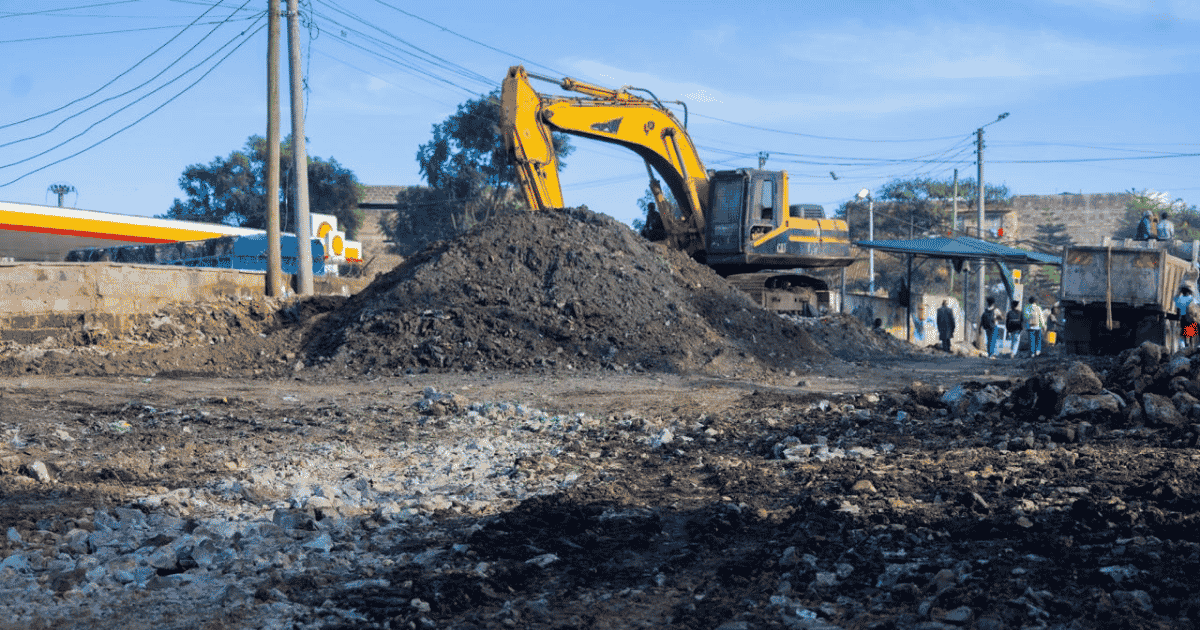
Recent developments raise pertinent concerns. Reports of tarmacking of trails inside the forest highlight the constant tension between development and conservation. Last year, there were attempts to allocate 51 acres of Karura land to expand Kiambu Road, a move that was swiftly challenged in court. More recently, the FKF and KFS overaw large-scale cutting of trees as part of forest management. At the center of these issues lies a critical question: is Karura Forest being protected as a natural ecosystem, or is it being turned into a plantation for profit?
A Brief History of Karura Forest
Before colonialism, the forest was home to various Gikuyu families. When the British took over, it was surrendered on the condition that it would remain forest land. Karura was gazetted in 1932, making it one of the earliest protected forests in Kenya.
The colonial government quickly shifted its purpose. Fast-growing exotic trees such as eucalyptus and cypress were planted to provide fuel for the railways and construction materials for Nairobi’s expansion. These species were favored because they matured much faster than indigenous trees, which took decades to grow. Over time, the natural forest was cleared and replaced largely with plantations of exotic trees.
The “shamba system,” introduced in the mid-20th century, reinforced this shift. Local farmers were allowed to grow food crops on cleared forest land as long as they replanted trees. While this system met demand for timber and fuel, it also entrenched a culture of treating forests as plantations for commercial use rather than ecosystems to be preserved.
After independence, pressure on Karura increased as Nairobi expanded. Demand for timber, fuel, and construction materials led to more plantations of exotic trees. Over the years, Karura also faced threats of land grabbing, insecurity which pushed many Nairobi residents away, and encroachment by private developers, sparking protests in the 1990s by the community, students, civil society organizations and led by Prof. Wangari Maathai. Out of these struggles, key milestones were achieved including a partnership between Friends of Karura Forest (FKF) and the Kenya Forest Service (KFS) which has transformed Karura into the safe and vibrant green space it is today.
However, according to the Karura Forest Strategic Management Plan 2016–2020, which draws on the Karura Forest Areas based on the KFS–FKF Rapid Proportional Survey (2010) and detailed mapping updates from Google Earth (2015), only 25% of Karura is natural forest.This reality begs a sobering question: since independence, have we done enough to restore indigenous tree cover? Did we continue the colonial practice of growing exotic trees because it was easy and profitable? And have Nairobians been conditioned to form emotional attachments to a “forest” that is partly an illusion, destined to be cut down after a few years?

Who Benefits from Karura Forest?
Today, Karura Forest attracts 70,000 visitors each month as reported by FKF in a recent press statement and entry fees run into millions. Is this revenue used to nurture artificial plantations that will later be harvested for private profit, or to protect and expand a lasting ecosystem that supports biodiversity?
Recommendations
For Karura Forest to remain a genuine conservation space, key steps need to be prioritized:
- Prioritize Indigenous Trees – Even though they take longer to mature, indigenous trees are the foundation of sustainability. They can provide long-term ecological balance, protect biodiversity, and restore the natural heritage of Karura.
- Channel Revenues to Indigenous Tree Growth – The revenue collected from entry fees should be invested directly into growing indigenous trees, not sustaining exotic plantations meant for harvesting. This is the only way to align financial resources with true conservation.
- Strengthen Collaboration Between FKF and KFS – Joint management has been central to Karura’s survival. Continued collaboration, built on transparency and accountability, can ensure that both conservation expertise, community particpation, and government oversight work hand-in-hand for the forest’s future.
- Retain Karura’s Natural Appeal: Visitors mainly visit Karura to experience the feeling of a natural forest. Conservation efforts should therefore focus on preserving its wild, authentic charm. Avoiding excessive artificial interventions will ensure Karura remains a genuine refuge for biodiversity and recreation.
Conclusion
True environmental conservation should be about preserving indigenous trees and planting new ones without the sole goal of harvesting them for sale after some time. Fruits, shade, beauty, and recreation are valuable benefits that can be enjoyed, but cutting trees down should not be a preferred forest management strategy. If organizations or individuals pursue profit-driven models, then they should be treated just as entrepreneurs without the guise of environmental and sustainability champions.
With true goodwill, we can nurture Karura into a thriving natural haven, one that future generations will enjoy with pride and wonder.
What’s your take on the current status and the future of Karura Forest? Share your thoughts in the comments.
Join our WhatsApp channel here for inspiring insights on social issues