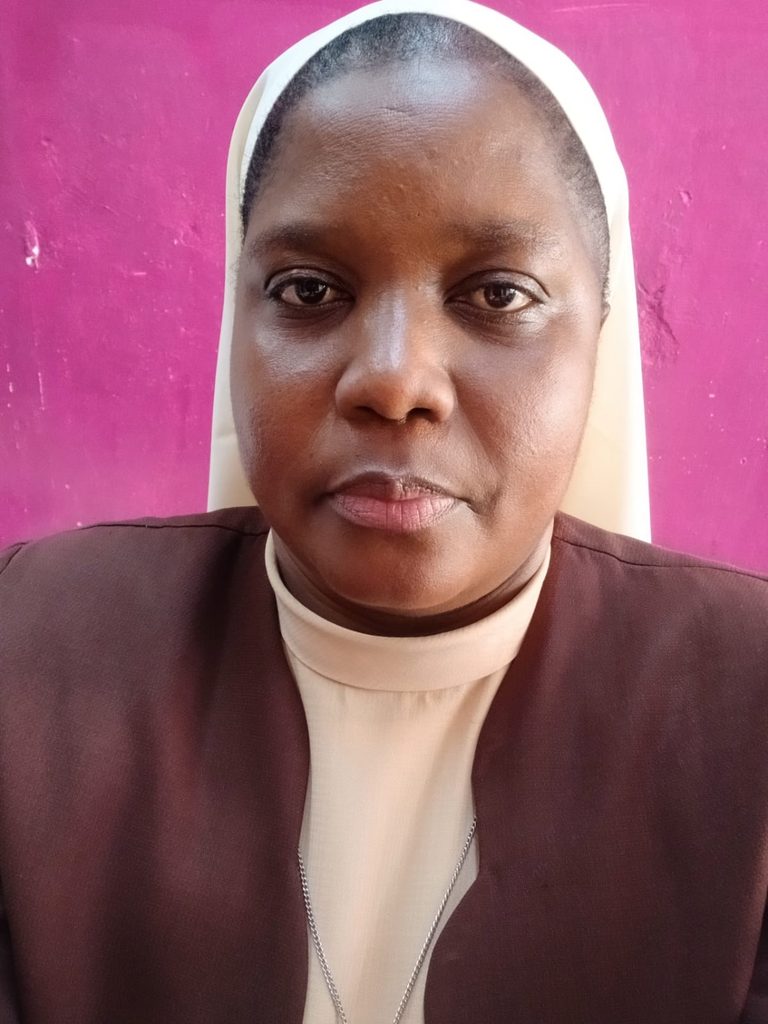
By Sr Kasina Patricia Ndunge – PhD Student in Social Transformation at Tangaza University.
Opinion
Ask Kenyans where the student housing crisis lives and they will point at the hostels: too few, too expensive, too grim. All of that is true, but the hostels are only what we can see. The deeper problem is that Kenya never decided who owns student housing. The Ministry of Education treats it as a campus matter, the housing ministry as a market matter, and counties as a question of planning, while the National Construction Authority, NEMA and the estate agents’ board each hold a piece of the oversight. Nobody holds the whole thing, and students live in that gap.
A policy that built a market
The gap has a history, and it began with a quiet decision. Government separated accommodation and catering from academic programmes, a shift that Ndung’u documented in a 2015 study of Kenyatta University, and universities could suddenly admit more students without building more beds. Private hostels moved in to fill the space. This was design rather than accident, since it solved a budget problem while creating a regulatory one: housing moved off campus, to where no education regulator follows it. A 2022 study of Kisii University by Omollo found private hostels ignoring planning standards on plot size, building coverage and road reserves, so the university grew while the neighborhood absorbed the cost and nobody answered for it. researchers stops short of the obvious inference, so here it is. When housing leaves the campus, safety, sanitation and fire standards leave with it, because they fall under public health and building law, and both are weakly enforced. Landlords are rarely inspected, which leaves students acting as the inspectors with no power to compel anything.
Real beds, thin proof
Public-private partnerships are usually offered as the answer, and Kenya’s record is the region’s best advertisement for them. Nwanne and Yissa reported in 2023 that a student-housing PPP launched in 2012 delivered 10,000 beds at Kenyatta University, and Giti and Ondieki reported in 2019 that projects at Moi, Embu and Southeastern Kenya University had a combined capacity of 24,400 beds. Those numbers deserve care, because they count supply, and as summarized neither source tells us the rent, the occupancy, or who sleeps in the beds. Think about how a PPP must work: a private financier needs a return, the return comes from rent, and unless a subsidy is built in somewhere, that rent will sit above what a bursary-dependent student can reliably pay. This is reasoning from structure, not from data, but it would explain why a shortage and empty premium beds can exist side by side. Supply and affordability are different problems, and partnerships mostly solve the first. The wider research is not encouraging either: Gideon and Winterhalter’s 2020 review of public-private partnerships in services like housing found little evidence that they reduce poverty or inequality in access. A 2022 study of Kenya by Chileshe and colleagues lists what makes them succeed, namely a functioning financial market, clear laws and a committed public agency, and those are things a country can build rather than hope for.
The students the shortage hides
An aggregate shortage also hides who loses most. In a Kenyan survey reported by Rana and colleagues in 2026, only 32.6% of respondents confirmed that inclusive dormitories existed, and just 4.7% confirmed accessible institutional websites, but “confirmed” is not “usable,” and the real number of working accessible beds is probably lower, with nobody counting. Nemes found in 2026 that policies shutting student mothers out of campus housing push them into the private market, with childcare on top, so what looks like a welfare rule works in practice as a tax on the women least able to pay. For low-income students the sharpest evidence comes from outside Africa: in a randomized trial of rent-free community housing, reported by Perez-Felkner and colleagues in 2022, students worked fewer paid hours, felt less stressed and felt more supported. Carried over to Kenya, who suggests rent is more than a cost, because it is study time sold off by the hour, and the student housing gap is also a time gap. TVET students are worst of all in the evidence, since nearly all of it concerns universities while colleges and TVET institutions, where many poorer students study, barely appear. That silence is a finding.
What nobody has counted
It is also a symptom of a larger blind spot, which is that Kenya cannot plan what it cannot count. The evidence offers no national ratio of beds to enroll students by institution type, no student rent index, nothing on rent as a share of loan or bursary income, no vacancy figures for purpose-built blocks, no record of crime, fire and disease in private hostels, and nothing systematic on TVET housing. A 2024 review of student-support research in sub-Saharan Africa by Mireku and colleagues found only five Kenyan studies on student support services, which is thin for a country this size. Without data every policy argument runs on anecdote, and that is why reform stalls, since no regulator can set a minimum standard for an industry nobody has measured.
Green is a cost strategy
Sustainability is usually pitched as a premium extra, but the evidence points the other way. Almasri and colleagues found in 2024 that dormitories accounted for 33% of campus energy use in their study, so that is where the savings sit, and Abdolshahi reported in 2025 that a modular student-residence prototype combining a 320-kW solar array with rainwater harvesting cost less than local benchmarks. There is a catch, though. Research in Ghana by Attakora-Amaniampong and colleagues, published in 2026, found that tariffs, occupancy density and institutional policy shape electricity use more than student attitudes do, so awareness campaigns will not do the job and metering, billing and occupancy rules decide the outcome. In Kenya, where unreliable water and power are core student complaints, solar panels and storage tanks are reliability infrastructure that also lowers running costs, and lower running costs are what make lower rent possible.
Who gains, and who shouldn’t be assumed to
Housing investment also promises jobs, local business and urban renewal, but that should be treated as a hypothesis, not a guarantee. Asante and colleagues warned in 2026 of “studentification,” in which landlords turn family compounds into hostels and developers build around campuses, pushing out long-term residents, so the same investment that houses students can displace the poor next door. The test of a good scheme is therefore not how many beds it delivers but who ends up living where.
A way forward
Fixing this starts with naming an owner: one lead agency, or a joint standards desk, with authority across education, housing and country planning, because accountability needs an address. That body should begin by running a national student housing census covering beds, rents, safety and accessibility, TVET included, which would cost little next to any building programme. It should then make PPP approval depend on access, requiring a set share of beds at bursary-affordable rates with cross-subsidies or land contributions spelled out, since universities hold land and land is their bargaining chip. Private hostels need licensing too, with minimum standards on sanitation, fire, security and accessibility tied to a simple registration and backed by student-reported complaints that someone acts on. Attakora-Amaniampong and colleagues noted in 2025 that African universities often collect that feedback and then ignore it. New blocks should include water capture and solar by default, and the vulnerable should be protected by rule, with accessible rooms reserved and the blanket exclusion of student mothers ended.
“Kenya do not simply lack beds. It lacks a decision maker, a dataset and a pricing logic that includes its poorest students. Partnerships can build, but only policy can decide who gets to sleep there.” – Sr Kasina Patricia Ndunge – PhD Student in Social Transformation at Tangaza University.”